
When it comes to working out, feeling motivated and excited to move is the gold standard, what everyone’s always reaching for. The reality? Even if you love exercising, you’re never going to be motivated all the time. There will always be days when you’re dragging, when life isn’t cooperating, when you just don’t. want. to.
But that doesn’t mean all hope is lost…
If exercise feels really hard for you right now, that’s normal! Sometimes “feeling motivated” has to do with things outside of yourself, and sometimes you can control it. In this article, I’m diving into the different types of motivation, reasons why you might not feel motivated to exercise, and how you can use science-based strategies to help you get motivated to work out.
Motivation: What is it?
What motivation is: the driving force or desire to take a specific action and achieve a specific goal
What motivation is not: one specific thing or skill, something you “have” or “don’t have”
A lack of motivation is not a moral failing.
I’m going to say that again.
A lack of motivation is NOT a moral failing.
Feeling unmotivated to exercise doesn’t make you lazy or undisciplined. When you feel unmotivated, it almost always means you have a competing motivation- you want something different instead. What do you gain by not working out, or what do you feel motivated to do instead?
Motivation isn’t actually a feeling at all! Pretty much every time you feel unmotivated, there are emotions at play that are making you resistant to exercise. The rest of this article will give you some ideas for what you might be feeling and how that affects your motivation.

6 Types of Motivation
Like I said above, motivation isn’t one thing. There are actually a lot of different types of motivation! We’re going to break them into two main categories: external motivation and internal motivation.
External Motivation
External motivations happen outside of yourself. The reason you want that goal comes from family and friends, society, social media, etc. External motivation can feel really powerful and effective, but ultimately it doesn’t last because it takes the power out of your hands. The names of these types aren’t important. What’s important is understanding where motivations come from and which ones benefit you the most when it comes to reaching your goal.
1. Amotivation
You have no motivation, zero desire to achieve this goal. If you literally don’t want it, there’s very little you can do to feel motivated to work toward it.
2. Extrinsic Motivation
You’re working on this goal because of external forces. You might say something like “I get a reward for this.” or “It’s expected of me.” or “[Person] is nagging me to do this.” A lot of fitness goals work this way, especially reward-based programs. It feels good in the moment and the reward is fun, but staying motivated after that specific program ends is very unlikely.
3. Introjected Extrinsic Motivation
This is an internal goal, but it’s given to you by someone else. It’s usually driven by guilt or shame. You might say something like “I would feel ashamed of myself if people thought I wasn’t working out.” or “I believe I have to exercise this way.” The shoulds and supposed tos come from somewhere- usually from societal pressure, your childhood, and system issues like diet culture. Becoming aware of these shoulds, the rules you’re following that you don’t need to, is step #1 for turning these motivations into something more helpful.
Internal Motivation
Internal motivations come from within yourself. It’s something you are choosing and claiming the want to improve your life. Working toward something you’re internally motivated to achieve is much more powerful than externally motivated actions. Being internally motivated still doesn’t mean you’re always be consistent or feel motivated, but it’s much more likely.
1. Identified Regulation
Identified regulation is working toward a goal based on your personal values. This behavior is personally important to you, even if you don’t love it. You might say something like “I believe this will help me feel better.” or “I think this is a good idea.” The choice is still coming from inside yourself and aligning with your values, which makes it more effective than the external motivations above.
2. Integrated Regulation
Integrated regulation is working toward a goal that aligns with your identity. It’s part of your sense of self and the person you are or are working to become. You might say something like “This is part of my lifestyle.” or “This is the way I’ve chosen to live and the person I want to be.” See how we’re starting to get internally deeper? That’s what helps create motivation that lasts.
3. Intrinsic Motivation
Intrinsic motivation is the most powerful and longest-lasting type of motivation. You’re doing this because you truly want to, because you enjoy it. You’re pursuing internal rewards like passion, curiosity, and growth. You might say something like “It’s fun to move my body.” or “I love how I feel after I finish a strength workout.”
Now the question is: how do you turn working out something you feel intrinsically motivated to do? How do you turn it into something you enjoy and want to do?
Needs Met = More Motivation
Before we talk about any specific strategies for creating motivation, I want to talk about Maslow’s Hierarchy of Needs. This pyramid created by psychologist Abraham Maslow shows the core needs that motivate human behavior. Seems relevant right? We’re going to start at the bottom and work our way up, talking about how each level can affect your motivation to exercise.
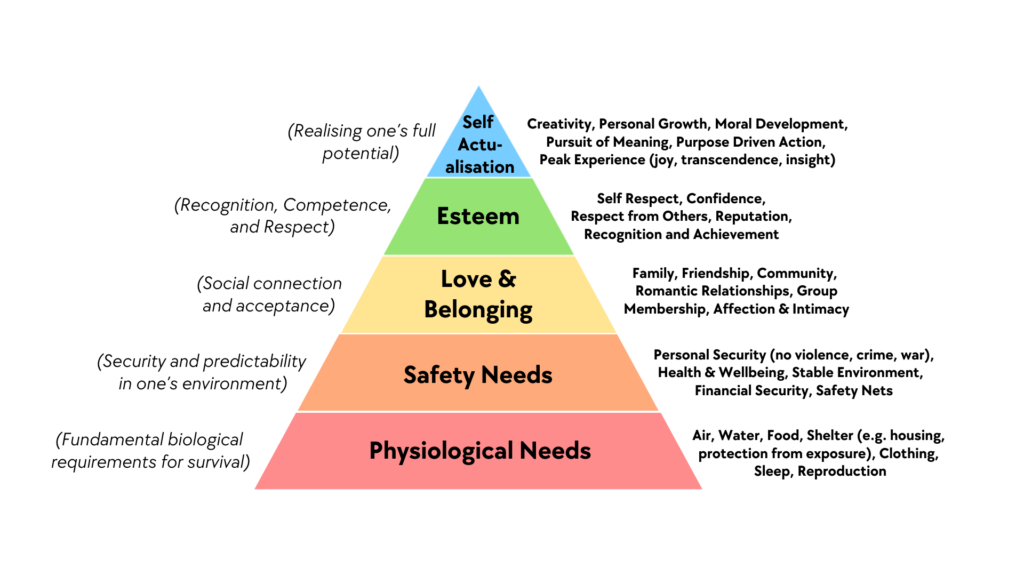
Level 1: Physiological Needs
The bottom level of this pyramid involves biological needs- food, water, rest, etc. The reality is, if these basic needs aren’t being met, it’s going to be tough to focus on anything else. If you’re experiencing food insecurity, consistent sleep deprivation, or a different situation that affects your basic needs, exercise is low on the list of things that need to happen. If you’re trying to pursue a workout goal (usually because society makes us feel like we have to) while trying to meet these basic needs, know that it’s okay to let it go for a while. While exercise is important, having the space to meet your basic needs is more important, and don’t let anyone else tell you differently.
In a much smaller way, this can apply in a day-to-day context: if you stayed up too late or skipped a meal for some reason, it might affect your motivation to do a workout that day or the following day.
Level 2: Safety Needs
This level is all about safety. There’s a lot that goes into this part, but what applies to exercise the most is personal safety. The reality is that a lot of people don’t feel safe in traditional fitness spaces. I could go on about this all day, but the fitness industry isn’t exactly an inclusive place. Most of the prominent fitness professionals are and have been able-bodied, thin-but-muscular white men, and they’ve made the rules for everyone else.
Unless a fitness space has put specific effort into being more inclusive, fitness spaces like gyms aren’t generally friendly to people with marginalized identities. Fitness spaces are also usually incredibly fatphobic thanks to systemic diet culture practices and ideas. You might feel like people are watching you, judging you, talking about you, or even directly discriminating against you, which makes that space unsafe. You do not have to “suck it up and find motivation” to go to a space where you are experiencing harm.
Mainstream fitness culture feeds on insecurity, shame, and punishment. When a fitness space (gym, community, class, video, etc.) makes you feel bad about yourself, actively shames you, or pushes you to do things you don’t want to do, it becomes an unsafe environment. If you don’t feel safe going to work out, of course you’re not going to feel motivated to go.
Now that online coaching spaces and communities are more widely available (and ideally more accessible), you’re able to cast a wider net and find a coach or community who aligns with your values regardless of location. You deserve a fitness space that feels safe! Working out at home might feel a lot safer than going to any nearby gym.
Level 3: Love and Belonging Needs
Everyone wants to feel like they belong! This level isn’t as critical as safety needs, but it’s still an important part of motivation. You might feel safe going to a gym, but do you feel like you actually belong there?
Almost everyone feels unsure and intimidated when they start exercising, but having someone welcome you or relate to you can help you feel more at ease. You want to spend time at a place (online or in-person) where you connect with other people.
This is one of the reason fitness classes are so successful. When everyone is working out together (or struggling together through a tough workout!) and see each other on a regular basis, you form bonds. You feel like you’re part of a community and you feel more motivated to keep attending.
Level 4: Esteem Needs
The next level above belonging is esteem. You might feel safe, you might even feel like you belong, but do you feel respected and capable?
Sometimes it can feel like an instructor or coach is out to get you. You feel like everything they’re asking you to do is pushing you past your limits or that they’re giving you workouts that are too advanced. Even if you feel like you belong with this group, you may not feel respected or capable of what you’re being told to do. If you’re constantly leaving a workout feeling defeated or incapable, you probably won’t feel motivated to go back.
In my programs, I’m always making sure my clients feel like they have control over their training. I may be the coach, but they still get to make their own choices about what’s best for their bodies. If they don’t want to do something, we take it out. I encourage my clients to modify frequently, whenever they feel like they want/need to. This isn’t just something I throw in- it’s a core part of my coaching process.
Level 5: Self-Actualization Needs/Goals
And here we are at the top! This is where we get to the fun stuff. When you’ve checked off the rest of the pyramid, you arrive at self- actualization. This is where you start to think about what you want, not just about needs. So… what do you want to do? If you’re struggling to figure this out, start with this article about setting goals, then keep reading below for science-based strategies to help you create more motivation day-to-day.
Before reading on, take some time to reflect on the types of motivation and if your needs are being met by your current exercise plan. What are you more aware of now? What changes could you make to move toward intrinsic motivation and make sure all your needs are being met?
6 Ways to Get Motivated to Work Out
The act of creating your own motivation is called metamotivation, or metamotivational regulation. As long as your needs are being met, you can regulate your motivation day-to-day by using strategies that boost it. There is no single game-changing tool that will always help you, even when you do feel internally motivated to work toward your goal. Instead, it’s about building a toolbox of strategies that you can practice and use when it’s January and 25° outside and you don’t want to get out of bed. Even when you don’t feel motivated, you can still exercise- a lack of motivation doesn’t have to mean bailing on your plan.
One more important thing before we get started: these strategies are not about always choosing exercise over other things. While I believe exercise is important, I don’t think it should come at the cost of other things you love. Consistency with exercise happens when you’re not trying to force an unsustainable workout plan into your schedule. These strategies aren’t about how to help you go to the gym when you would rather hang out with friends/family or do something else that genuinely enriches your life. Go do the fun things! Your workout can wait.
Tool 1: Autonomy
As I talked about above, the best type of motivation is when you’re doing something you enjoy and something that is personally important to you. When it comes to your workouts, have you ever asked yourself how you want to be working out? There are tons of different ways to exercise, and you can choose!
Autonomy is the freedom to make your own choices, and it’s one of the most important tools you can use to get motivated to work out. Exercising how you want will make you much more motivated than feeling like you have to do something you dread.
You can start doing this by speaking from a place of radical responsibility. This the practice of 100% owning your actions, even when you feel unmotivated in the moment. The key difference here is how you frame it: instead of “I have to…..” start saying “I’m choosing to do…” and see how that changes your feelings on the action.
“Ugh I have to do a workout today but I don’t want to.” → “I’m choosing to do a workout today because I know I’ll feel really good afterward.”
Another way you can practice autonomy is by giving yourself two options where both help move you toward your goal. With a question like “Do I workout or skip today?” you’re pitting a decision that moves you toward your goal (going to the gym) against one that doesn’t (skipping).
Instead, you can try asking yourself:
- Do I want to take a walk or do a strength workout today?
- Do I want to do squats or presses at the gym?
- Do I want to do slow, chill exercises sets or a speedy circuit workout for my home workout?
You’ll feel more motivated for whatever you end up doing because you chose it, instead of feeling like you’re forcing yourself to do something. No matter which option you pick, you know it’s still helping you be the person you want to be!
Tool 2: Identify the competing motivations.
When you’re telling yourself you’re feeling unmotivated, getting to the bottom of what’s going on is a great tool. Here’s the deal: “unmotivated” is not actually a feeling, so when you “feel unmotivated” there’s an emotion underneath. When you identify what you’re currently feeling, what’s beneath the lack of motivation, you’re making yourself aware. Awareness is the first step to making any sort of change!
A lot of times, you’re anticipating what’s going to happen when you go to your workout. When you’re telling yourself you’re feeling unmotivated, you might be feeling:
- dread because it’s cold outside and you really don’t want to be cold.
- anxious because you feel like people watch/judge you at the gym.
- overwhelmed because you don’t know what to do for a workout.
- irritated because you want to do something else instead.
- tired because you didn’t get enough sleep last night.
If you’re not sure about what you’re feeling, you can use a tool like an emotions wheel to help you get ideas. The idea is to identify what you do want if you don’t want to work out. In the examples, what you’re actually motivated by is warmth, a safe space, instructions, more time for fun stuff, and rest. Once you’ve identified what’s motivating you, you can get curious and start thinking about possible solutions.
Using the examples from above:
- “I’m dreading the cold, so I can heat up my car ahead of time, get some handwarmers, and wear an extra layer over my workout clothes.”
- “I’m anxious because of other people at the gym, so I’m going to do my workouts at home for now until I feel more comfortable with the exercises.”
- “I’m overwhelmed because I don’t know what to do, so I’m going to find a follow-along online workout or join a program where I’m given workouts and instruction.”
- “I’m irritated because I want to do something else, so I’m going to do that now and intentionally schedule a workout tomorrow when I have more space in my schedule.”
- “I’m tired because I stayed up too late, so I’m going to start my workout to see if I get an energy boost, otherwise I’ll let myself go home and rest.”
Tool 3: Your thoughts are just thoughts.
I know it seems silly to say “your thoughts are just your thoughts,” but it’s true! Just because you think something doesn’t mean it has to dictate your behavior. Many times, your thoughts aren’t even true- they’re trying to tell you a different story than reality.
It’s all about helping yourself make choices that bring you closer to the person you want to be. You WANT to exercise and get stronger, even if your brain is telling you something different in the moment.
When you’re thinking things like “I don’t want to go to the gym today” or “I have too much to do to be able to fit in a workout,” ask yourself these two questions:
- Is this actually true?
- What decision helps me be the person I want to be?
Let’s break down these examples:
“I don’t want to go to the gym today.”
- Is this actually true? → “I do want to go to the gym because I really want to get stronger. Maybe I’m just feeling a little tired because I didn’t sleep well last night. I’ll go, but I’ll take it a little easy for that reason.
- What decision helps me be the person I want to be? → “I want to be a fit and active person, and I know going to the gym is the way to make that happen.”
“I have too much to do to be able to fit in a workout.”
- Is this actually true? → “I do have a lot to do, but I can take 15 minutes to exercise if I’m intentionally prioritize my tasks for the rest of the day. I know I’m feeling overwhelmed because I have a project deadline coming up and it’s making me feel short on time.”
- What decision helps me be the person I want to be? → “I want health and self-care to be an important part of my life. Making sure I regularly have time for exercise, even if it’s short, is a big part of that because exercise helps me feel good during the day.”
Using the idea of intrinsic motivation from above, it’s easier to feel motivated when you’re connecting actions to your identity and values. Asking yourself questions like these helps you do that and reminds you in the moment of what’s important to you!
Tool 4: Identify Quicksand Points
A quicksand point is a spot during your day when you get “stuck.” A common example of this is when you get home from work: you lay down on the couch and end up scrolling for an hour before getting dinner. All of a sudden there’s no time for exercising!
Once you hit one of these quicksand points, it can be tough to pull yourself out of it to get yourself to exercise. Instead of trying to think of how to get unstuck, think about how you can avoid or delay hitting those quicksand points! A fix for getting stuck on the couch could be doing a 10 minute workout immediately when you get home (before you sit and get stuck), and then you can scroll and chill out.
We all have different quicksand points, so it can be helpful to track what you do over the course of a few days or a week to help identify where you’re getting stuck. Once you identify where you’re losing time, how can you adjust what you’re doing to avoid it?
Tool 5: Environmental Manipulation
Your environment has a huge impact on your behavior! Usually this is talked about in a macro sense- moving houses or cities, taking tropical vacations to reset, etc. But you can change small things about your environment, wherever you are, to promote or discourage certain behaviors.
Common examples of this idea:
- Setting out your workout clothes the night before so it’s the easiest choice for the next day.
- Putting a mat and workout equipment in the center of the living room so it’s a visual reminder to do a couple exercises.
- Keeping your phone in a different room so you don’t get distracted during exercise time.
- Sticking post-it notes on the mirror that remind you what you need for the gym.
There are SO many more ideas! The goal is to figure out what you can change about your environment so that a) your desired behavior is as easy as possible, and b) your undesired behavior is as difficult as possible.
Tool 6: Celebrate the Wins
As humans, we have a negativity bias. We are significantly more likely to point out and remember negative things that happen, like when we skipped a workout, than celebrate the time we did go. The issue is, your brain loves data and proof of progress. The more you notice the wins, the more motivated you’ll be to keep going! It helps you confirm for yourself that you are the person who exercises, you are getting more consistent with workouts, you are becoming a more active person.
Try it out:
Schedule a reminder each week to check in and think about what’s been going well. Even the smallest of wins counts! Where did you do 1% better than last week or last month?
Get other people in on your celebration! A small win doesn’t mean you need to celebrate alone- tap into your community and let people get excited about your progress with you!
.
Let’s wrap it up:
When it comes to motivation, there is no “one size fits all answer.” It takes practice and experimentation to figure out what works for you! All the tips in this article can help you get started, but the topic of motivation is deep and well-studied, so there are always more resources for you to look into. The important part is to try things, and try them more than once. Especially once you get into the metamotivation strategies, you can’t just try it one time and say it doesn’t work. Stick with a strategy for a couple weeks to make sure you’re giving yourself meaningful practice- that’s how you take it from learning to putting it into action regularly!
Fitness mindset (motivation and related topics) is an important part of all my programs! When you want to exercise regularly, it isn’t just about learning the exercises, it’s about adjusting your mindset to build a strong relationship with exercising and making it a regular part of your life! Here’s how you can get started:
1. Train Your Brain is my 5 day fitness mindset course that helps you start reframing what you believe about fitness.
2. Full-Color Foundations and Colorful Strength, my group programs, are full of fitness mindset lessons!
3. In Prismatic Coaching, my 1:1 coaching program, you can get support for your specific mindset struggles and we work together to find solutions that work with your life.


Sarah Siertle

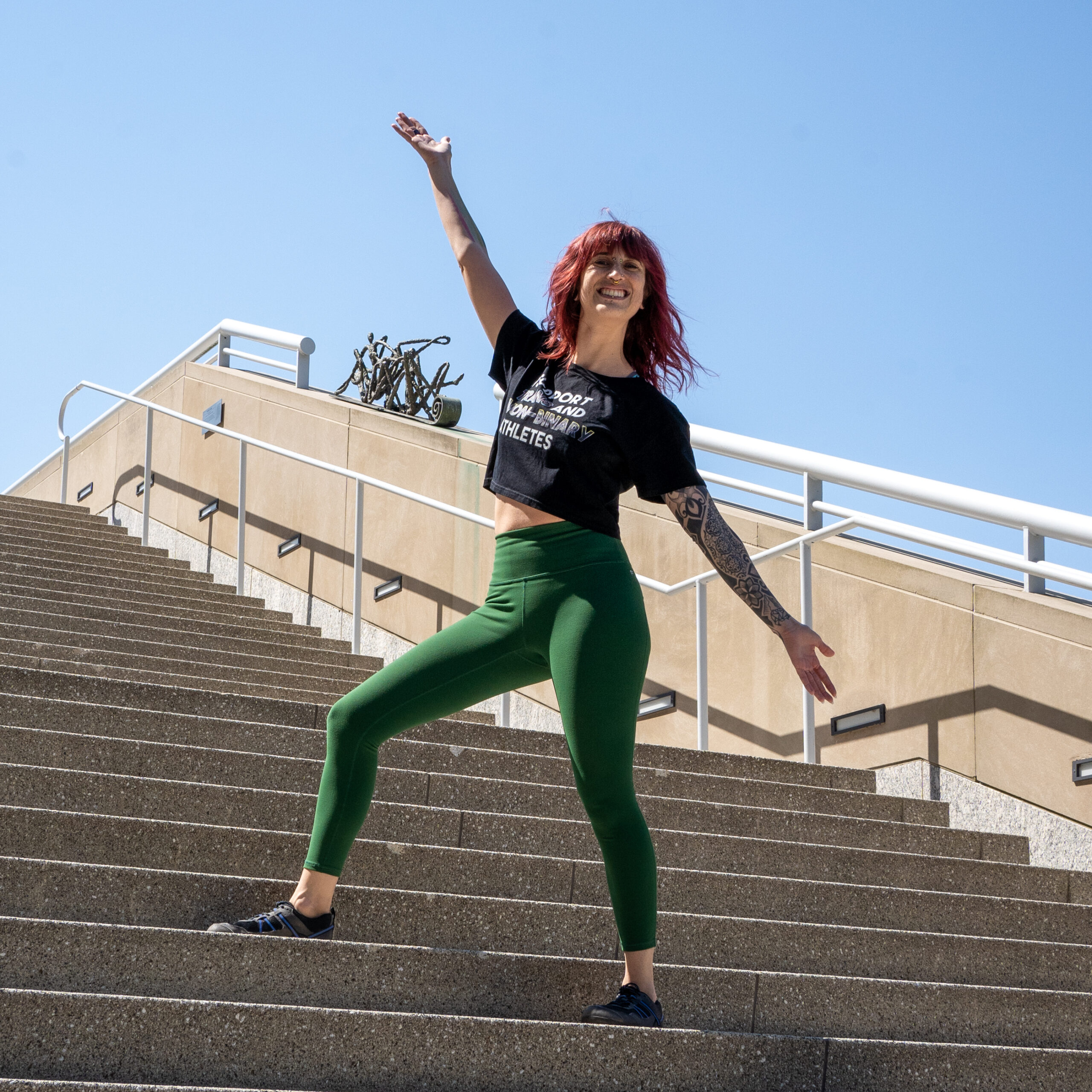
Hey! I'm Sarah!
I'm an inclusive strength & movement coach who helps people get hella strong so they can have fun and live their lives in full color!
My coaching is beginner-friendly, movement-based, and size-inclusive. I believe in coaching that is kind, not shaming or judgmental as so many fitness experiences are.
If you're ready to start your strength journey, you can check out your training options or get five days of five-minute workouts for free!

Comments