
You’re familiar with the idea of lifespan- how long your life is. But if you’re not in the fitness industry or you don’t consume a lot of fitness content, you probably haven’t heard of these next two terms: healthspan and strengthspan.
Healthspan: the part of your life that you are healthy for
Strengthspan: the part of your life that you are strong for
Healthspan
When you read about healthspan, it’s usually tied with longevity/a longer lifespan. The idea is that you’re not just living longer, but you have a higher quality of life for the years you live. Things that improve your healthspan include eating nutrient-rich foods, staying active, and avoiding smoking and alcohol. The earlier you start these health-focused behaviors, the more you can prevent heart disease, cancer, and more.
The issue with focusing on health alone is that you can’t necessarily control it. You can optimize everything in your life to promote healthy behaviors, even to the level of obsession, but you can’t always prevent becoming physically disabled or developing a chronic illness. There are also social determinants of health like economic stability, your environment, access to healthcare, and support systems. These are systemic influences that can drastically affect your healthspan.
Ultimately, the baseline of “healthy” means different things to different people.
Strengthspan
Your strengthspan focuses in on muscular strength and physical function, unlike the more general concept of healthspan. While a strength baseline also varies person to person, you have a lot more control over building strength. A longer strengthspan influences your ability to perform daily tasks and stay resilient as your age.
Many studies have connected all the ways strength training can improve your lifespan and your healthspan. We’re going to dig into the idea of strengthspan by taking a look at a recent scientific article.
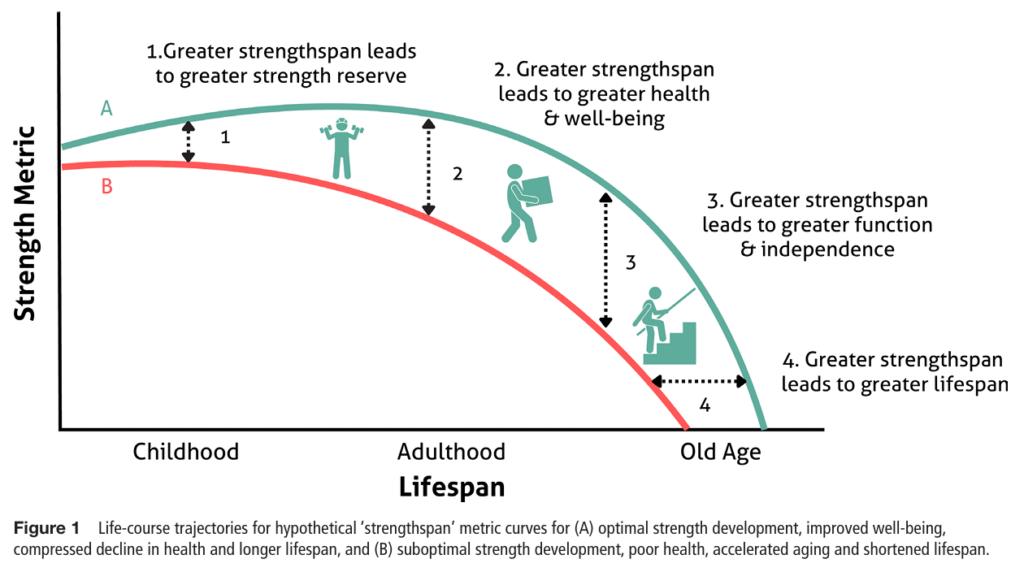
Bridging the gap between strengthspan and lifespan
“Bridging the gap between strengthspan and lifespan” was published in the July 2024 issue of the British Journal of Sports Medicine. This article popularized the term “strengthspan” and emphasizes the importance of strength training throughout your life. The goal is to build strength early and maintain lifelong strength, instead of just prioritizing strength later in life or after issues develop. Only ~20% of adults are currently (as of 2023) meeting the CDC’s Physical Activity Guidelines for both aerobic and muscle-strengthening activities.
“Bridging the gap” isn’t a very long article, but it breaks down what strength training (called muscle strength activities in the article) looks like during childhood, adulthood, and old age and why it’s so necessary for lengthening your strengthspan.
Strength Training as a Child/Adolescent: Start Strong
Strength training for kids is a controversial topic! “Bridging the gap” argues that muscle-strengthening activities are critical during childhood to impact strengthspan length. The authors found a strong association between muscle weakness earlier in life and disability later in life.
Introducing strength training during childhood and/or adolescence helps with motor skills, body composition, and injury prevention. Strength training is usually used for youth sports conditioning, but it’s beneficial for all children and young adults. Depending on the age of the child, adaptations need to be made to make sure it’s age-appropriate.
“If we are to foster health ageing, we must recognise the importance of extending the strengthspan from the geriatric years back to a foundation of muscular strength and physical function in the paediatric years.”
The risks of youth strength training are anecdotal. There’s no scientific evidence of muscle strength activities being inherently dangerous or stunting growth. Coaching can help children and young adults navigate strength training safely and build a long-term relationship with exercise. Positive experiences with strength early on in life can help turn exercise from something to dread and avoid into an enjoyable hobby.
Strength Training as an Adult: Be Strong
There are so many benefits to strength training as an adult. Like I mentioned above, only 1 in 5 adults are currently meeting the recommended guidelines for physical activity. When it comes to strengthspan, regular strength training postpones age-related declines. Continuing the thread of muscle strengthening during adulthood can improve physical and mental health.
Many adults struggle with fitness motivation and view exercise as something to dread thanks to diet culture and bad past experiences. It can be especially beneficial for adults to hire a coach to reframe exercise and build positive associations with moving their bodies.
I love talking about how strength training helps you live your full-color life, and strength training as an adult helps you feel more capable and confident doing daily tasks like lifting luggage, moving furniture, and carrying bags.
Strength Training as an Older Adult: Stay Strong
I’m not going to lie, strength training isn’t some magical fountain of youth. Even if you exercise regularly, your body will change as it ages. That’s just life. There are many ways to adapt strength training as your movement and needs change. Strength training doesn’t mean you need to jump straight to lifting loaded-up barbells.
Living weights and increasing your strengthspan helps your bones and muscles in ways other types of physical activity can’t. Even if you didn’t start lifting weights earlier in life, you can still see huge changes when you start strength training!
“Long-term participation in MSA may improve physical function (climbing stairs, holding onto handrails and maintaining balance) while decreasing the risk of falls and fall-associated injuries in older adults.”
In the conclusion of “Bridging the gap,” the authors encourage earlier interventions in regards to strength and more awareness about the importance of a strengthspan and building lifelong strength. They mention how important it is to dispel myths that hold people back from trying strength training and the need to launch public health initiatives that prioritize strength and make it more accessible to the general public. No matter where you’re at right now, it’s never too late to start lifting weights!
“Strengthspan-centered actions will add life to years and not just years to life.”
If you want to get a taste of what strength training can feel like, try Strength Snippets! It’s a *free* five-day home workout email experience that helps you get stronger in just a few minutes every day and reframes your feelings about exercise from “bleurgh” to “ohhhh this could be something I actually like doing.”
You can ease into building strength at home without feeling like you have to do a whole workout—each Snippet only takes about five minutes each day! There might even be prizes for finishing all of them…
Sign up for Strength Snippets right here!
Sarah Siertle

Hey! I'm Sarah!
I'm an inclusive strength & movement coach who helps people get hella strong so they can have fun and live their lives in full color!
My coaching is beginner-friendly, size-inclusive, and all about helping your body move better. Discover how good fitness can feel when it doesn't include guilt or shame!
If you're ready to start your strength journey, you can check out your training options or get five days of five-minute home workouts for free!

Comments